


Massage Therapy for Runners
Hip Flexors, IT Band Discomfort, Calves, and Ankle Mobility
Massage therapy for runners can be the difference between “getting through miles” and running with smooth, efficient mechanics that feel strong week after week. If you run in Greenville, NC, you’ve probably felt it: hip flexors that tighten after speed work, outer-knee or lateral thigh irritation often labeled as IT band discomfort, calves that feel like they’re always on the verge of cramping, and ankles that don’t move as freely as they should. Kinetic Physical Therapy and Wellness believes individualized patient care is the key to optimal outcomes, and that’s especially true for runners because your stride, training volume, terrain, and recovery habits all affect how your body responds.
Massage therapy for runners is most effective when it’s strategic and paired with guidance that supports lasting results. A well-planned massage therapy session doesn’t just chase soreness—it addresses the restrictions that change your form and load tissues in the wrong places. When the hips can extend, the calves can lengthen, and the ankles can dorsiflex, your stride becomes more economical, your impact is better managed, and your recovery improves. That’s why runners often benefit from targeted massage work that focuses on the hip flexors, lateral hip stabilizers, calves, and the foot-ankle complex.
Why Massage Therapy for Runners Targets the Hips, Lateral Thigh, and Calves
Massage therapy for runners works best when you treat running like a full-body skill, not just a leg workout. Your hips control stride length and stability, your lateral hip muscles help keep the pelvis level, and your calves and ankles manage shock absorption and propulsion. When one part is restricted, other tissues compensate, which is when discomfort tends to show up.
Hip flexors are a prime example. Runners sit for work, drive to training, then ask the hip to extend repeatedly during running. Tight hip flexors can limit extension and encourage overstriding or an exaggerated low-back arch. Massage therapy for runners may focus on the iliopsoas region, rectus femoris, and surrounding tissues to reduce tension and restore more comfortable movement. A targeted massage therapy plan can also complement strengthening so your hips can stay open under load.
IT band discomfort is another common complaint, but the IT band itself is dense connective tissue and often not the true “problem.” Many runners feel discomfort along the outer knee or lateral thigh due to load management issues and tension in the structures that interact with the IT band, especially the tensor fasciae latae (TFL), gluteus medius, gluteus maximus, and lateral quadriceps. Massage therapy for runners commonly targets these surrounding muscles to reduce tone, improve movement quality, and support better hip control. Strategic massage work here can help reduce the “tight strap” feeling and improve how the leg tracks during stance phase.
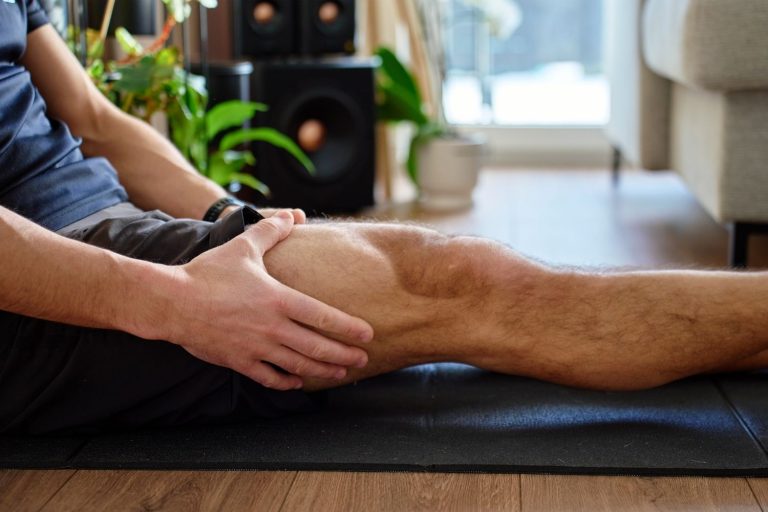
Calves and ankles are the workhorses of running. They absorb impact, store elastic energy, and help drive push-off. Tight calves can reduce ankle mobility, which forces compensation at the foot, knee, and hip. Massage therapy for runners may focus on the gastrocnemius, soleus, Achilles region, and intrinsic foot muscles to support ankle dorsiflexion and improve tissue tolerance. When the calves release and the ankle moves better, runners often notice smoother landings and less lower-leg fatigue.
Massage Therapy for Runners: Key Areas, Techniques, and Mobility Benefits
Massage therapy for runners should be customized, but there are key areas that consistently matter for stride efficiency and comfort. At Kinetic Physical Therapy and Wellness, expert care and personalized treatment mean your session is tailored to what your body is doing, not just where it hurts.
Common focus areas in massage therapy for runners include:
- Hip flexors and anterior thigh tissues that limit hip extension
- Lateral hip stabilizers that influence pelvic control and knee alignment
- Lateral quadriceps and TFL region linked with IT band discomfort patterns
- Calves and Achilles region that affect ankle mobility and push-off mechanics
- Foot and ankle tissues that support shock absorption and stability
Massage therapy for runners may include a blend of techniques depending on your needs and sensitivity. Deep tissue work can help reduce stubborn tension, myofascial techniques can improve tissue glide, and trigger point work can calm overactive muscle fibers that alter mechanics. A skilled massage therapy approach also considers timing—what part of your training cycle you’re in and how close you are to key runs.
Runners often benefit from scheduling massage in these ways: - During base building to keep tissues adapting to increased volume
- Before peak mileage weeks to maintain mobility and manage load
- After races or long runs to support recovery and reduce stiffness
- During injury flare-ups to address compensations and improve movement comfort
Massage therapy for runners can also support ankle mobility by reducing calf tension and improving fascial glide around the lower leg. Better ankle dorsiflexion can help you land with more control, reduce excessive pronation or compensation, and support a smoother transition through mid-stance.
If you’re working on mobility at home, pairing massage therapy with simple drills can reinforce results. Helpful additions include: - Calf stretching with both straight-knee and bent-knee variations
- Ankle dorsiflexion mobilizations (gentle, controlled)
- Hip flexor stretching with proper pelvic alignment
- Glute activation drills to improve hip stability during running
These habits don’t replace massage therapy for runners—they enhance it by teaching your body to keep the range of motion and stability you gain during a session.
Massage Therapy Frequently Asked Questions
Massage Therapy for Runners and the Warning Signs You Shouldn’t Ignore
Massage therapy for runners becomes especially valuable when your body starts sending consistent signals that your recovery isn’t matching your training demand. Many runners chalk discomfort up to “normal soreness,” but recurring tightness in the same areas often indicates a mobility restriction, stability issue, or load spike that needs attention.
Common signs you may benefit from massage therapy for runners include:
- Hip flexors that feel tight after nearly every run, especially hills or speed work
- Outer knee or lateral thigh discomfort linked with IT band discomfort patterns
- Calf tightness that lingers for days or affects your stride
- Reduced ankle mobility that makes squatting, stairs, or running feel stiff
- A feeling of heaviness or decreased bounce during push-off
- Increasing soreness as weekly mileage climbs, even when sleep is solid
Massage therapy for runners can help you respond early rather than waiting until discomfort becomes a full injury. When paired with an individualized plan at Kinetic Physical Therapy and Wellness, massage supports the tissues that keep you moving while also improving how your body handles training stress.
It’s also important to recognize what won’t fix the problem. If you’re repeatedly stretching aggressively, foam rolling until you’re bruised, or trying to “push through” with more miles, you may be feeding irritation rather than resolving it. Massage therapy for runners is most effective when it’s part of a balanced recovery strategy that includes: - Smart training progression (avoid sudden mileage spikes)
- Strengthening for hips and calves to support load tolerance
- Mobility work that is consistent and controlled
- Adequate sleep and hydration for real recovery
When you combine these habits with targeted massage therapy, you create an environment where your body can adapt instead of breaking down.
Make Massage Therapy Part of Your Running Plan
Massage therapy for runners isn’t just about feeling good—it’s about maintaining stride efficiency, reducing compensation, and keeping your body resilient through training cycles. Whether you’re preparing for a 5K, building toward a half marathon, or simply trying to run pain-free in Greenville, NC, Kinetic Physical Therapy and Wellness can help you stay consistent with expert care and personalized treatment. Contact Kinetic Physical Therapy and Wellness today to schedule massage therapy and learn how a targeted massage plan can improve hip flexor mobility, reduce IT band discomfort patterns, support calf recovery, and restore ankle mobility for lasting results.
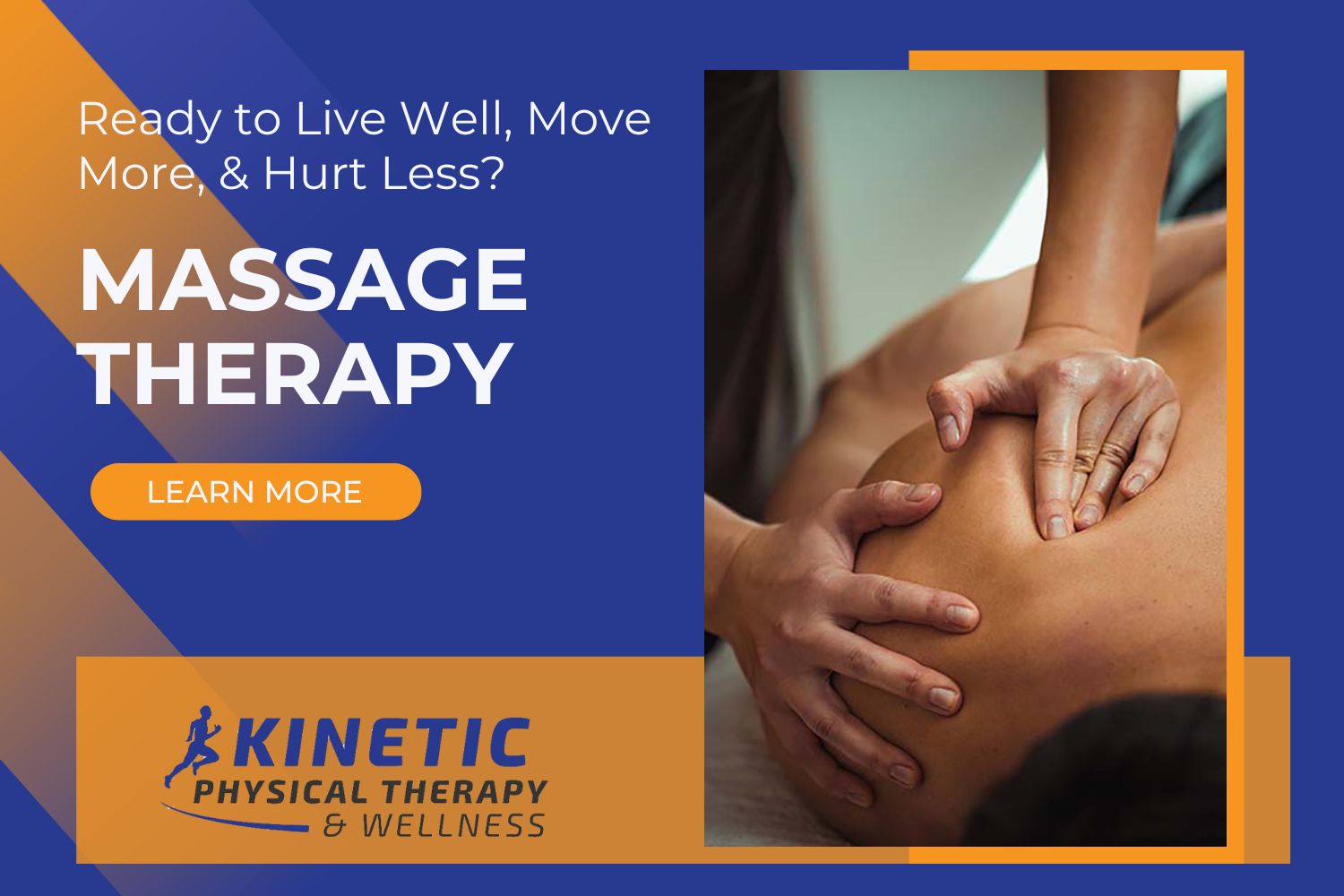
Ready to relax, rejuvenate, and relieve tension? Experience the healing power of personalized Massage Therapy at Kinetic Physical Therapy and Wellness in Greenville, NC! Our expert therapists provide tailored massages designed to target your specific needs—whether it’s relieving muscle pain, reducing stress, or enhancing overall wellness. Don’t wait to feel your best—book your massage therapy session today and let us help you unwind and recharge!
Please Share
Facebook
Twitter
LinkedIn
categories
Recent Posts
Massage Therapy for Runners
Hip Flexors, IT Band Discomfort, Calves, and Ankle Mobility
Massage therapy for runners can be the difference between “getting through miles” and running with smooth, efficient mechanics that feel strong week after week. If you run in Greenville, NC, you’ve probably felt it: hip flexors that tighten after speed work, outer-knee or lateral thigh irritation often labeled as IT band discomfort, calves that feel like they’re always on the verge of cramping, and ankles that don’t move as freely as they should. Kinetic Physical Therapy and Wellness believes individualized patient care is the key to optimal outcomes, and that’s especially true for runners because your stride, training volume, terrain, and recovery habits all affect how your body responds.
Massage therapy for runners is most effective when it’s strategic and paired with guidance that supports lasting results. A well-planned massage therapy session doesn’t just chase soreness—it addresses the restrictions that change your form and load tissues in the wrong places. When the hips can extend, the calves can lengthen, and the ankles can dorsiflex, your stride becomes more economical, your impact is better managed, and your recovery improves. That’s why runners often benefit from targeted massage work that focuses on the hip flexors, lateral hip stabilizers, calves, and the foot-ankle complex.
Why Massage Therapy for Runners Targets the Hips, Lateral Thigh, and Calves
Massage therapy for runners works best when you treat running like a full-body skill, not just a leg workout. Your hips control stride length and stability, your lateral hip muscles help keep the pelvis level, and your calves and ankles manage shock absorption and propulsion. When one part is restricted, other tissues compensate, which is when discomfort tends to show up.
Hip flexors are a prime example. Runners sit for work, drive to training, then ask the hip to extend repeatedly during running. Tight hip flexors can limit extension and encourage overstriding or an exaggerated low-back arch. Massage therapy for runners may focus on the iliopsoas region, rectus femoris, and surrounding tissues to reduce tension and restore more comfortable movement. A targeted massage therapy plan can also complement strengthening so your hips can stay open under load.
IT band discomfort is another common complaint, but the IT band itself is dense connective tissue and often not the true “problem.” Many runners feel discomfort along the outer knee or lateral thigh due to load management issues and tension in the structures that interact with the IT band, especially the tensor fasciae latae (TFL), gluteus medius, gluteus maximus, and lateral quadriceps. Massage therapy for runners commonly targets these surrounding muscles to reduce tone, improve movement quality, and support better hip control. Strategic massage work here can help reduce the “tight strap” feeling and improve how the leg tracks during stance phase.
Calves and ankles are the workhorses of running. They absorb impact, store elastic energy, and help drive push-off. Tight calves can reduce ankle mobility, which forces compensation at the foot, knee, and hip. Massage therapy for runners may focus on the gastrocnemius, soleus, Achilles region, and intrinsic foot muscles to support ankle dorsiflexion and improve tissue tolerance. When the calves release and the ankle moves better, runners often notice smoother landings and less lower-leg fatigue.
Massage Therapy for Runners: Key Areas, Techniques, and Mobility Benefits
Massage therapy for runners should be customized, but there are key areas that consistently matter for stride efficiency and comfort. At Kinetic Physical Therapy and Wellness, expert care and personalized treatment mean your session is tailored to what your body is doing, not just where it hurts.
Common focus areas in massage therapy for runners include:
- Hip flexors and anterior thigh tissues that limit hip extension
- Lateral hip stabilizers that influence pelvic control and knee alignment
- Lateral quadriceps and TFL region linked with IT band discomfort patterns
- Calves and Achilles region that affect ankle mobility and push-off mechanics
- Foot and ankle tissues that support shock absorption and stability
Massage therapy for runners may include a blend of techniques depending on your needs and sensitivity. Deep tissue work can help reduce stubborn tension, myofascial techniques can improve tissue glide, and trigger point work can calm overactive muscle fibers that alter mechanics. A skilled massage therapy approach also considers timing—what part of your training cycle you’re in and how close you are to key runs.
Runners often benefit from scheduling massage in these ways: - During base building to keep tissues adapting to increased volume
- Before peak mileage weeks to maintain mobility and manage load
- After races or long runs to support recovery and reduce stiffness
- During injury flare-ups to address compensations and improve movement comfort
Massage therapy for runners can also support ankle mobility by reducing calf tension and improving fascial glide around the lower leg. Better ankle dorsiflexion can help you land with more control, reduce excessive pronation or compensation, and support a smoother transition through mid-stance.
If you’re working on mobility at home, pairing massage therapy with simple drills can reinforce results. Helpful additions include: - Calf stretching with both straight-knee and bent-knee variations
- Ankle dorsiflexion mobilizations (gentle, controlled)
- Hip flexor stretching with proper pelvic alignment
- Glute activation drills to improve hip stability during running
These habits don’t replace massage therapy for runners—they enhance it by teaching your body to keep the range of motion and stability you gain during a session.
Massage Therapy Frequently Asked Questions
Massage Therapy for Runners and the Warning Signs You Shouldn’t Ignore
Massage therapy for runners becomes especially valuable when your body starts sending consistent signals that your recovery isn’t matching your training demand. Many runners chalk discomfort up to “normal soreness,” but recurring tightness in the same areas often indicates a mobility restriction, stability issue, or load spike that needs attention.
Common signs you may benefit from massage therapy for runners include:
- Hip flexors that feel tight after nearly every run, especially hills or speed work
- Outer knee or lateral thigh discomfort linked with IT band discomfort patterns
- Calf tightness that lingers for days or affects your stride
- Reduced ankle mobility that makes squatting, stairs, or running feel stiff
- A feeling of heaviness or decreased bounce during push-off
- Increasing soreness as weekly mileage climbs, even when sleep is solid
Massage therapy for runners can help you respond early rather than waiting until discomfort becomes a full injury. When paired with an individualized plan at Kinetic Physical Therapy and Wellness, massage supports the tissues that keep you moving while also improving how your body handles training stress.
It’s also important to recognize what won’t fix the problem. If you’re repeatedly stretching aggressively, foam rolling until you’re bruised, or trying to “push through” with more miles, you may be feeding irritation rather than resolving it. Massage therapy for runners is most effective when it’s part of a balanced recovery strategy that includes: - Smart training progression (avoid sudden mileage spikes)
- Strengthening for hips and calves to support load tolerance
- Mobility work that is consistent and controlled
- Adequate sleep and hydration for real recovery
When you combine these habits with targeted massage therapy, you create an environment where your body can adapt instead of breaking down.
Make Massage Therapy Part of Your Running Plan
Massage therapy for runners isn’t just about feeling good—it’s about maintaining stride efficiency, reducing compensation, and keeping your body resilient through training cycles. Whether you’re preparing for a 5K, building toward a half marathon, or simply trying to run pain-free in Greenville, NC, Kinetic Physical Therapy and Wellness can help you stay consistent with expert care and personalized treatment. Contact Kinetic Physical Therapy and Wellness today to schedule massage therapy and learn how a targeted massage plan can improve hip flexor mobility, reduce IT band discomfort patterns, support calf recovery, and restore ankle mobility for lasting results.
Ready to relax, rejuvenate, and relieve tension? Experience the healing power of personalized Massage Therapy at Kinetic Physical Therapy and Wellness in Greenville, NC! Our expert therapists provide tailored massages designed to target your specific needs—whether it’s relieving muscle pain, reducing stress, or enhancing overall wellness. Don’t wait to feel your best—book your massage therapy session today and let us help you unwind and recharge!
Please Share
Facebook
Twitter
LinkedIn